How Omnichannel AI Receptionists Improve Healthcare Front Offices
Healthcare front offices face high call volumes and fragmented communication. AI receptionists that answer both calls and texts take routine booking and questions off the desk so staff can focus on patients.

The Challenge Facing Healthcare Front Offices
Healthcare front offices juggle a high volume of patient calls, appointment scheduling, and follow-ups — all while trying to maintain a positive patient experience. Traditional phone systems often lead to dropped calls, repeated information, and frustrated patients. Meanwhile, staff spend significant time on repetitive tasks like appointment booking and reminders, limiting their capacity for complex patient needs.
What Omnichannel AI Receptionists Bring to the Table
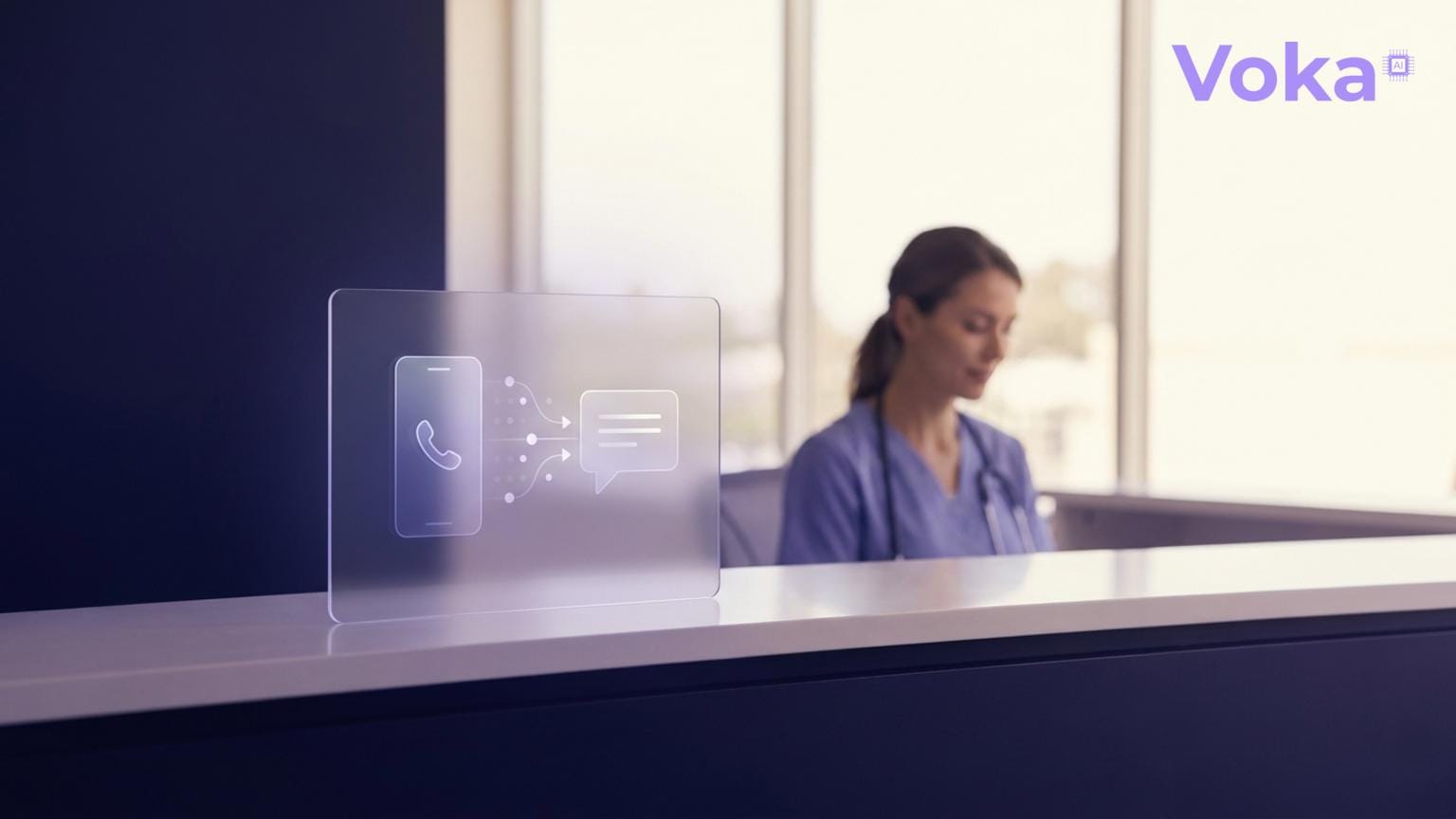
Omnichannel AI receptionists answer both phone calls and text messages. With Voka, the same AI receptionist can answer calls and, if you turn on two-way texting, reply to texts sent to your business number, with calls and text threads visible in one read-only inbox. Each call and each text thread is handled on its own: the AI does not carry what a patient said on a call over into a later text. The AI handles routine tasks such as booking, rescheduling, and answering common questions, freeing staff to focus on higher-value interactions.
Key Features Driving Impact
- Calls and Texts in One Place: Staff can review calls and two-way text threads side by side, each with a transcript or message history, instead of checking separate tools.
- AI-to-Staff Handoffs: Complex or sensitive issues can be warm-transferred to the staff members you choose, with the AI briefing them on the caller’s request; callers who can’t be transferred can leave a callback request.
- Integration with Existing Tools: Voka books into Square, Acuity, Calendly or Google Calendar, and its call webhooks can feed Zapier, n8n or Make to reduce manual entry.
Why This Matters for Healthcare SMBs
Implementing an AI receptionist can improve operational efficiency and patient experience at the same time: patients who call while the desk is busy or closed get an answer and, with a calendar connected, a booking instead of a voicemail. Note that Voka itself doesn’t send appointment reminders; your scheduling system may send its own.
Beyond that, patients experience fewer frustrations and faster responses, which can improve retention and referrals. Staff workload also shifts from repetitive tasks to more meaningful patient care.
Trade-Offs and Considerations
- Initial Setup and Training: Integrating AI receptionists requires upfront time and some process changes. Expect a ramp-up period before seeing full benefits.
- Complex Cases Still Need Humans: AI handles routine tasks well but cannot replace human judgment for sensitive or complex patient issues.
- Data Privacy: While AI improves efficiency, healthcare providers must ensure patient data is handled securely within applicable regulations. Voka does not claim HIPAA compliance.
Choosing the Right AI Receptionist Plan
Voka’s plans are month-to-month with no contract. Most practices start on Flex ($89/mo, 300 minutes) or Value ($149/mo, 600 minutes), and going over your minutes never stops calls. Connecting a scheduling tool such as Square, Acuity, Calendly or Google Calendar (a paid add-on) is what lets the AI book rather than take messages.
Bottom Line
Omnichannel AI receptionists offer a practical way for healthcare front offices to modernize workflows, cut missed calls, and improve patient communication. They are not a silver bullet but a tool that, when implemented thoughtfully, can deliver measurable ROI and a better patient experience.
Learn more about how AI receptionists can fit your healthcare practice’s needs at vokaai.com.